Golf Club Fitting

Is It Your Swing, or Is It Your Clubs?
A golfer who’s been fighting the same miss for months usually assumes it’s technique — a swing thought they haven’t nailed down yet, a tempo issue, something to grind out on the range. Sometimes that’s exactly right. But a surprising number of persistent misses trace back to equipment that was never matched to the golfer in the first place: a shaft too stiff or too soft for their swing speed, a lie angle that has the clubface pointed somewhere it shouldn’t be, a length that’s fighting their setup before the club ever moves.
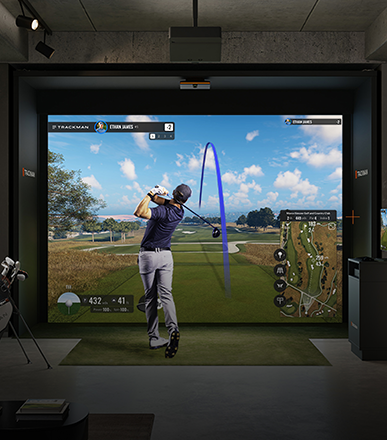
A fitting session at Grip It & Rip It Golf in Palestine, Texas exists to answer that question with data instead of guesswork. We put you in a bay, run your current clubs and a set of test options through TrackMan, and look at exactly what’s happening at impact — so you know whether the fix is a swing change or an equipment change before you spend months working on the wrong one.
What Gets Measured During a Fitting
Every swing in a fitting session is captured across more than two dozen data points, which is a lot more than “did that one feel good.” The numbers that matter most for equipment decisions:
- Ball speed and smash factor — how efficiently energy transfers at contact, which points to shaft and head fit more than swing technique
- Launch angle and spin rate — together these determine trajectory and carry, and both shift noticeably with the right loft and shaft combination
- Club path and face angle — the numbers behind your miss pattern, whether that’s a push, a hook, or something that changes club to club
- Dispersion across repeated shots — consistency data that shows whether a given setup is repeatable for you specifically, not just capable of one good swing
None of this replaces feel entirely, but it removes the guessing from decisions that used to rely on it.
Fitting the Whole Bag
- Driver and fairway woods — the biggest opportunity for most golfers, since loft, shaft weight, and face angle adjustments here tend to move the needle on both distance and dispersion at once
- Irons — shaft material and flex, lie angle, and consistent loft gapping across the set, so a three-iron swing and a nine-iron swing aren’t fighting different problems
- Wedges — bounce and grind selection matter more here than almost anywhere else in the bag, especially for players who see a lot of variety in turf and lie conditions
- Putters — length, lie, and head weight all influence stroke consistency, and a putter fitting is often the fastest way to cut a couple of strokes per round
What a Session Actually Looks Like
Sessions happen in one of our enclosed bays, starting with your current clubs to set a baseline before anything changes. From there we introduce test options and compare the data side by side after each round of swings — not a single “before and after,” but enough repetitions to see what’s consistent versus what was one good swing. Most golfers walk away with a clearer read on their own miss than they came in with, regardless of what equipment decision they end up making.

Fitting Before You Buy, or Fitting What You Already Own
Some golfers come in ahead of a new set purchase and want the data to guide it from the start — that’s the version most people picture when they think “fitting.” Just as common, though, is a golfer who already owns clubs they like and wants to know whether those clubs are actually right for them, or whether a shaft swap or lie angle correction could unlock something that’s currently getting left on the table. Both are the same process; the only difference is whether new equipment is on the table at the end of it.
If what you actually need is maintenance rather than a fitting — fresh grips, a shaft replacement, general upkeep — that’s covered separately on our golf club services page.
Your New Favorite Golf Spot Awaits
Find Out Before You Spend Another Season Guessing
- 2212 Crockett Road Suite 200, Palestine, Texas 75801
Book your simulator bay today and start playing the game your way.